AI is reshaping how McKinsey makes money
Evergreen

Image Credit
AI is changing how consulting firms like McKinsey & Company work and how they get paid.

AI is changing how consulting firms like McKinsey & Company work and how they get paid.

The article explores the idea that science fiction doesn't always have to portray dystopian futures. It highlights authors who are crafting narratives that offer hope and optimism, challenging the prevailing trend of bleak visions of the future. By examining works of science fiction that focus on utopian or more balanced depictions of society, the article suggests that these stories can inspire readers to imagine alternative futures and explore the possibilities of human potential.
The article mentions several examples of hopeful stories in science fiction:
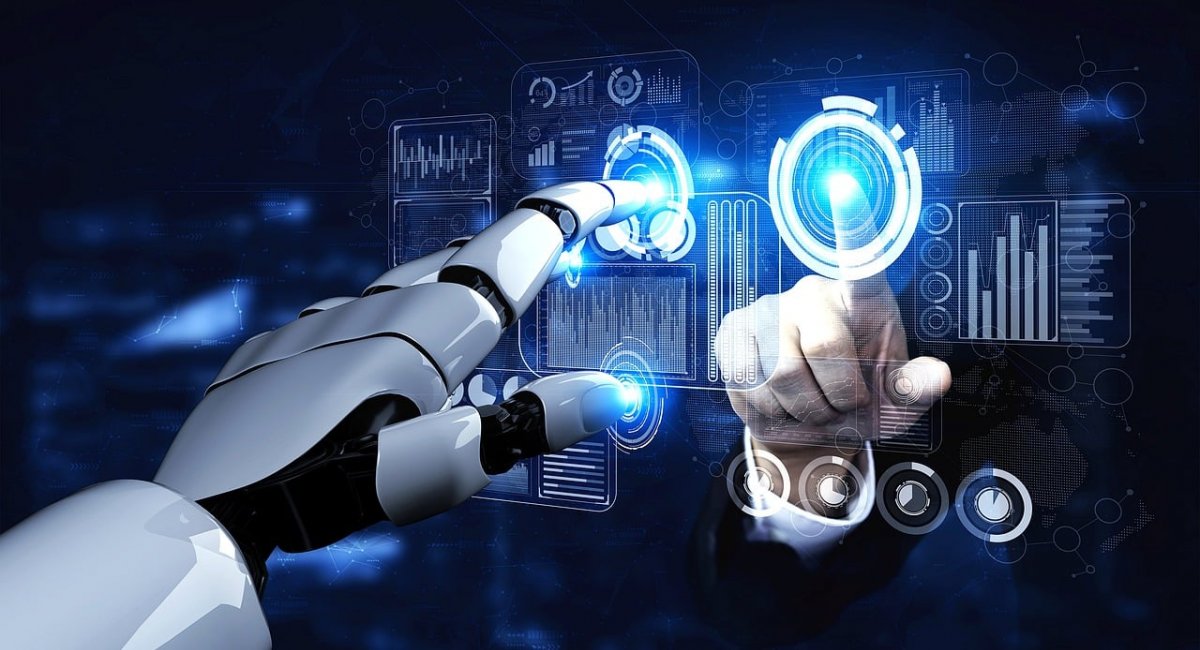
The article explores the potential impact of artificial intelligence (AI) on the consulting industry, particularly focusing on whether AI could replace traditional consulting firms like McKinsey & Company. It discusses the rise of AI-driven platforms and tools that offer data analysis, problem-solving, and decision-making capabilities comparable to those of human consultants.
It is not a secret that our world is constantly changing, business strategies are continually developing, and technologies are evolving. So how can your employees keep up with all new knowledge and skills? Here are the ways a few big businesses are doing that:
School for employees at DBS bank
DBS Bank, a multinational company with headquarters in Singapore, ensures that all 26,000 employees are encouraged to keep learning, no matter their age or seniority.

In a Forbes article, Bernard Marr predicts the 25 most important technology trends that will define the next 10 years. Not surprisingly, a number of them involve A.I. and IoT. Others will come from things like virtual, augmented and mixed realities; nanotechnologies; 3D printing; and Big Data.
The past 20 years have given us major technological game-changers, like Bluetooth, social media, and, of course, the iPhone. Other innovations include flash drives, hybrid cars, GPS, and the Cloud.

The year 2020 has served as a benchmark for many predictions, from business markets to technological advances to climate change. In 2015, Factor magazine published a list of ten predictions for 2020, most of which have come true.
Same-day cancer treatment: YES
Self-driving cars on the road: YES
Cannabis market legalized and booming: YES
4 billion internet users: YES (almost 4.5 billion)

The 2019 Nobel Prize in chemistry has been awarded to three scientists who played a large role in developing lithium-ion batteries: Stanley Whittingham of the U.K., American John Goodenough (at 97, the oldest Nobel laureate ever), and Japan’s Akira Yoshino. Whittingham created the first functional lithium-ion battery in the 1970s, then Goodenough increased its capacity two-fold over the next 10 years. Finally, Yoshino removed the pure lithium, making it much safer to use.

In 1989, physics researcher Jim Berners-Lee began writing code for what would become the World Wide Web. Thirty years on, and Berners-Lee’s invention has more than justified the lofty goals implied by its name. But with that scale has come a host of troubles.
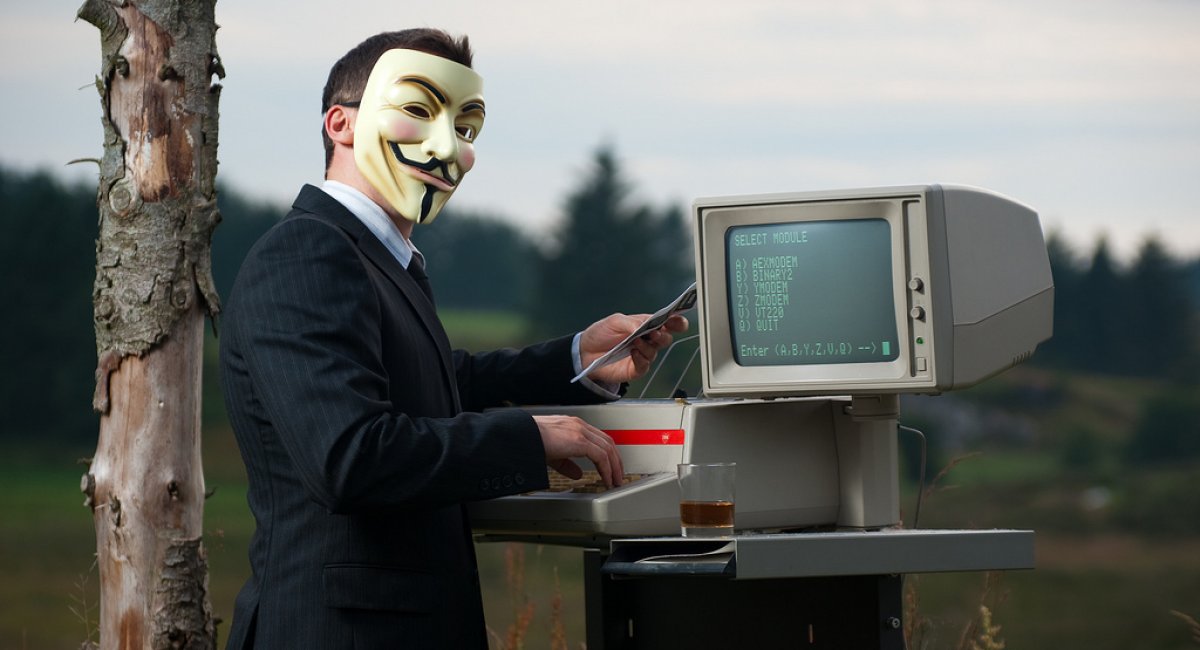
The internet today isn’t what Tim Berners-Lee pictured when he invented the World Wide Web nearly three decades ago.
Berners-Lee says the web is “at a tipping point” as it faces threats like market concentration, data breaches, user frustration with ads and privacy, hate speech and so-called “fake news.”
“If you’d asked me 10 years ago, I would have said humanity is going to do a good job with this,” he said. “If we connect all these people together, they are such wonderful people they will get along. I was wrong.”

There are few technologies being more rapidly adopted and expanded in 2018 than voice A.I. In just a few years, the use of voice systems has evolved from simple voice commands to entire ecosystems of applications and interactions.
5G, or 5th generation mobile, is the next big leap in wireless communications. 5G will radically improve the bandwidth, capacity and reliability of mobile broadband, and will push mobile speeds from 100 Mbps to upward of 10 Gbps.
But the real excitement over 5G comes with new uses that simply aren’t possible with today’s networks. Many of these involve the revolution in sensors, low-cost transmitters and cloud-based software known as the Internet of Things (IoT).

Massimo Bottura is one of the world's greatest chefs. He has made it his mission to put an end to global hunger and believes that technology can make this a reality.

Online shopping is skyrocketing. So what are cities going to do about it?
The rising numbers of deliveries are adding to concerns about traffic and pollution in rapidly growing cities around the world. In Europe and Asia, cities have barred deliveries during certain hours, built warehouses to centralise distribution and provided millions in funding to encourage firms to switch to quieter, greener equipment. In the U.S., discussions about how to handle the glut of online shipments were somewhat slower to start, but they're happening now.

After more than a decade working in tech, Kimbal Musk (brother of famous technologist Elon Musk) decided to lean into his true passion: local food. He now runs a chain of local food-focused restaurants called The Kitchen, as well as Big Green, a national nonprofit that builds educational gardens in public schools.

In America, on a unanimous voice vote, a Senate committee approved legislation that authorizes self-driving car makers to sell as many as 80,000 vehicles a year within three years that would be exempt from current safety standards as manufacturers develop technology for autonomous vehicles.

Amazon and Microsoft are teaming up to get their virtual assistants to talk to each other.
Someone with an Amazon Echo smart speaker might use Cortana to book a meeting or to check a calendar, Amazon suggested in a press release announcing the news on Wednesday. Or Cortana users could control their smart home via Alexa.

At SoftBank Group's annual shareholders meeting in Tokyo on Wednesday, founder and chief executive Masayoshi Son said: "Some say SoftBank is a mobile phone company, but that's wrong [...] We are an information revolution company. A cellphone is just a device. From now on, we will be in an age where all infrastructure will be connected by information networks."
Son has about 30 targets lined up in emerging sectors such as artificial intelligence, robotics and the internet of things. SoftBank, he made it clear, intends to be at the forefront of all these fields.

The so-called sharing economy has spread to a variety of fields such as cars and homes, and Japan has seen another rising trend in recent years—bicycles.
A growing number of municipalities and private firms are providing bikes to gauge whether such services will catch on.
According to NTT Docomo Inc., which has been teaming up with municipalities to offer a bike-sharing service on an experimental basis, its bicycles were used about 1.8 million times in fiscal 2016, which ended March 31, up from 20,000 in fiscal 2012.

Amazon swooped in to buy the high-end grocer Whole Foods on Friday, paying $13.7 billion, or $42 a share—a healthy 27% premium on the previous day's closing price.
So what's in it for Amazon?
There are a couple of strategic plays at work for the online retail giant.
For starters, acquiring Whole Foods' 440 US stores—many of them in prime locations—could bolster the network for AmazonFresh, the company's grocery delivery service.

Singularity—the point when machine intelligence surpasses our own and goes on to improve itself at an exponential rate—will happen by 2050, according to Masayoshi Son, the Japanese tech mogul leading SoftBank.
In 2017 he said: "I totally believe this concept. In the next 30 years, this will become a reality."

![Chef Massimo Bottura [Photo by Alice Jessica North]](https://upload.wikimedia.org/wikipedia/commons/f/f2/Massimo_Bottura%2C_from_World%27s_50_Best_Restaurants_Awards_2012.JPG)